
Within the sports law practice, the Costaș, Negru & Asociații team today offers you an analysis of the most recent case in professional football, resulting in the exclusion of a club from the competition.
The English Football League (EFL) Disciplinary Committee has handed down a ruling that is a first in world football. Southampton FC has been excluded from the Premier League promotion playoff final due to a spying scandal.
Southampton FC currently plays in the Championship (England’s second division) and finished the season in 4th place, which allowed them to participate in the promotion playoffs for the Premier League.
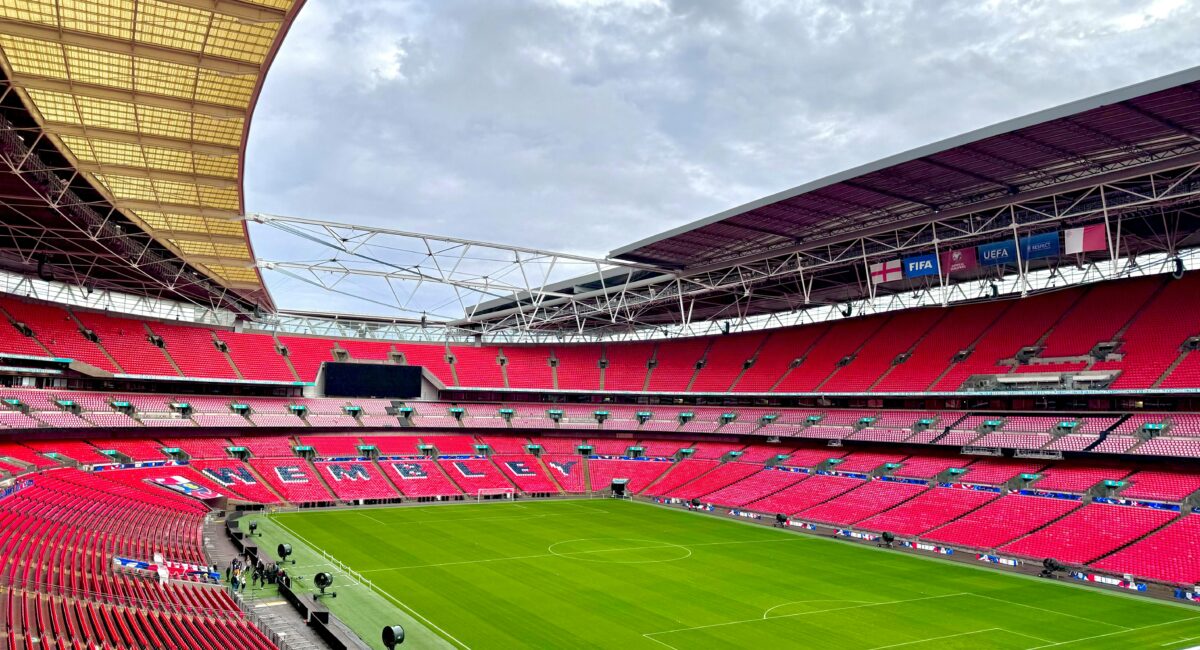
In the playoff semifinals, Southampton FC won against Middlesbrough and was set to play on May 23, 2026, at the famous Wembley Stadium against Hull City.
However, on May 19, 2026, the EFL Disciplinary Committee issued a ruling sanctioning Southampton FC for violating the rule set forth in Article 127.1 of the EFL Regulations, which states that “no club may directly or indirectly observe or attempt to observe an opponent’s training sessions within 72 hours prior to a scheduled match between the two clubs”.
Southampton FC was accused of violating these provisions by its opponent in the match held on May 9, 2026, respectively Middlesbrough. In front of the Disciplinary Committee, the club acknowledged these violations of the regulations reported by Middlesbrough. They also admitted that similar acts had been committed prior to matches against Oxford United in December 2025 and Ipswich Town in April 2026.
As a result of this decision, the club has been sanctioned with a ban from participating in the Premier League promotion playoff final and a four-point deduction to be applied in the 2026/2027 season. Additionally, Middlesbrough’s right to participate in the playoff final has been confirmed.
Southampton FC appealed the decision to the League Arbitration Tribunal. On May 20, 2026, the appeal was dismissed, making the decision definitive at this time.
As mentioned earlier, this sanction marks an absolute first in world football, although the act itself—spying on an opponent—has previously been reviewed by disciplinary committees within sports federations or FIFA, or by the Court of Arbitration for Sport (CAS) in Lausanne, as we will see below.
The first such case in English football occurred in 2019, when Leeds United, led by manager Marcelo Bielsa, was fined £200,000.
During the investigation conducted at that time, it was determined that a member of the staff led by manager Marcelo Bielsa had spied on Derby County’s training sessions, and the club admitted to these actions.
At that time, there was no explicit provision prohibiting the observation of opposing teams’ training sessions, and Leeds United was sanctioned under Article 3.4 of the EFL Regulations, which stated that in relations between clubs, each club is obligated to act in good faith.
Following the ruling against Leeds United, the EFL regulations were amended, and the provisions of Article 127.1 were added, which expressly prohibit observing or attempting to observe an opponent’s training sessions within 72 hours of a direct match between the two teams.
A similar situation also occurred at the 2024 Olympic Games held in Paris. The New Zealand women’s national soccer team reported to the FIFA Disciplinary Committee certain acts of spying during a training session held on July 22, 2024, involving a drone flying over the training field.
Following an investigation conducted by the FIFA Disciplinary Committee, it was determined that these acts were committed by individuals associated with the Canadian women’s national soccer team.
The provisions of Article 13 of the FIFA Disciplinary Code were invoked, which states that all parties involved in sporting activities are obligated to comply with the FIFA Statutes and adopted regulations, as well as the principles of fair play, loyalty, and integrity, and Article 6.1 of the Olympic Football Tournament Regulations for the Games of the XXXIII Olympiad Paris 2024.
The FIFA Appeal Committee sanctioned the Canadian women’s soccer team with a fine of 200,000 Swiss francs and a deduction of six points in the standings of the competition held during the Olympic Games.
The Canadian women’s national soccer team challenged this decision before the ad hoc division of the CAS, which resolved the case through CAS Decision OG 24/09, which can be consulted here.
The CAS arbitrators examined whether the sanction was manifestly disproportionate, as argued by representatives of the Canadian women’s national soccer team, and concluded that while it was a severe sanction, it was by no means manifestly disproportionate. They noted that the act of spying on opponents using a drone was very serious and unprecedented. They also argued that much more drastic sanctions could have been imposed, such as exclusion from the competition or forfeiting matches.
Furthermore, the court examined the argument raised by the sanctioned national team that these sanctions directly and exclusively affect the athletes who achieved these results on the soccer field. In this regard, it was demonstrated that the Canadian sports federation is the sanctioned party, based on the federation’s liability for acts committed by individuals within the organization. However, the fact that the athletes are indirectly affected by this sanction is an inevitable consequence of the actions taken by the organization to which they belong.
Cases of espionage in soccer are no longer mere behind-the-scenes anecdotes. They have become a real test of the ability of national and international bodies in the field to sanction these serious acts with appropriate measures. The FIFA Appeal Committee and the Court of Arbitration for Sport were the first institutions to recognize that such acts can no longer be punished solely through the imposition of financial penalties.
We can observe that in the United Kingdom, the emergence of such cases led to legislative changes that directly impose this ban on spying on opponents, a legal provision that was applied for the first time in the Southampton FC case.
There is thus a historical symmetry that is hard to ignore: the English invented soccer and gave the world its first written rules. A century and a half later, they were also the first to feel the need to introduce explicit provisions in this regard, thereby acknowledging that the game evolves not only on the field but also off it.
It remains to be seen whether, following the Southampton FC incident, national federations, FIFA, and UEFA will amend their regulations to explicitly mention this ban on spying on opponents as a means of match preparation.
This article was prepared for the Costaș, Negru & Asociații Blog by Raul Celmare and Paul Buzea, both lawyers from the Cluj Bar Association.
Costaș, Negru & Asociații is a civil law firm with offices in Cluj-Napoca, Bucharest and Arad, which offers assistance, legal representation and consultancy in several areas of practice through a team composed of 16 lawyers and consultants. Details regarding legal services and the composition of the team can be found on the website https://www.costas-negru.ro. All rights for materials published on the company’s website and through social networks belong to Costaș, Negru & Asociații, their reproduction being permitted only for information purposes and with correct and complete citation of the source.